News |
The High Council for the Sea Strengthens the Capacities of Women in the Maritime Sector
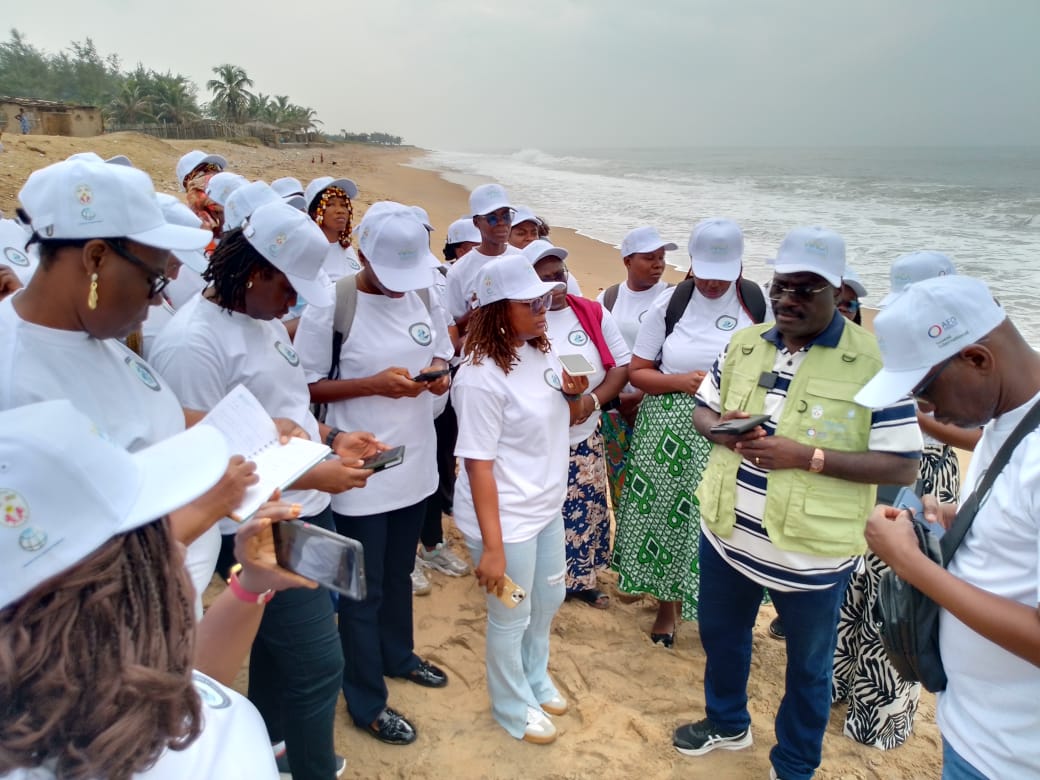
From 23 to 25 June 2026, the High Council for the Sea, in collaboration with the Regional Implementation Support Unit of the West Africa Coastal Areas Management Program (WACA BAR), hosted by IUCN, organised a capacity-building workshop for around 50 women working in the maritime sector. Over three days, participants deepened their knowledge of two major ocean governance instruments: the Agreement on the Conservation and Sustainable Use of Marine Biological Diversity of Areas beyond National Jurisdiction (BBNJ Agreement) and marine spatial planning.
The first session provided participants with a better understanding of the BBNJ Agreement, adopted under the United Nations Convention on the Law of the Sea. Having entered into force on 17 January 2026, the Agreement aims to strengthen the protection of marine biodiversity in areas beyond national jurisdiction. It provides, among other measures, for the establishment of marine protected areas, environmental impact assessments, the sharing of benefits arising from marine genetic resources, as well as capacity building and technology transfer to developing countries. Togo signed the Agreement on 22 September 2023, and the bill authorising its ratification is currently before the National Assembly.
Discussions also focused on marine spatial planning, an integrated management tool that helps organise the various uses of marine space while balancing economic development, ecosystem protection and the prevention of conflicts between users. This approach also contributes to strengthening climate resilience and promoting more inclusive governance, with women playing an effective role in the management of marine and coastal areas.
Welcoming the strong participation of the women, WACA BAR Coordinator Dr Mallé Diagana highlighted their interest in maritime governance tools and reaffirmed the Regional Implementation Support Unit’s commitment to continuing its support.
At the opening of the workshop, Laré Penn, Chief of Staff of the High Council for the Sea, stressed that “maritime excellence is not built solely through laws, strategies or declarations, but above all through competent, trained and committed women and men capable of turning ambitions into tangible results.”
The workshop concluded with a field visit to Agbavi, an area still affected by coastal erosion and located near infrastructure developed under the WACA Program. Guided by senior engineer Adéwolé Eusebio, participants learned about the functioning and design of coastal protection structures, as well as sand nourishment operations between groynes and the filling of abandoned lagoon channels. The field visit gave them a better understanding of the solutions being implemented to combat coastal erosion and strengthen the resilience of coastal communities.