Sort By: Newest Post
-
Publication
São Tomé et Príncipe: fiche pays sur les plastiques
Author: World Bank
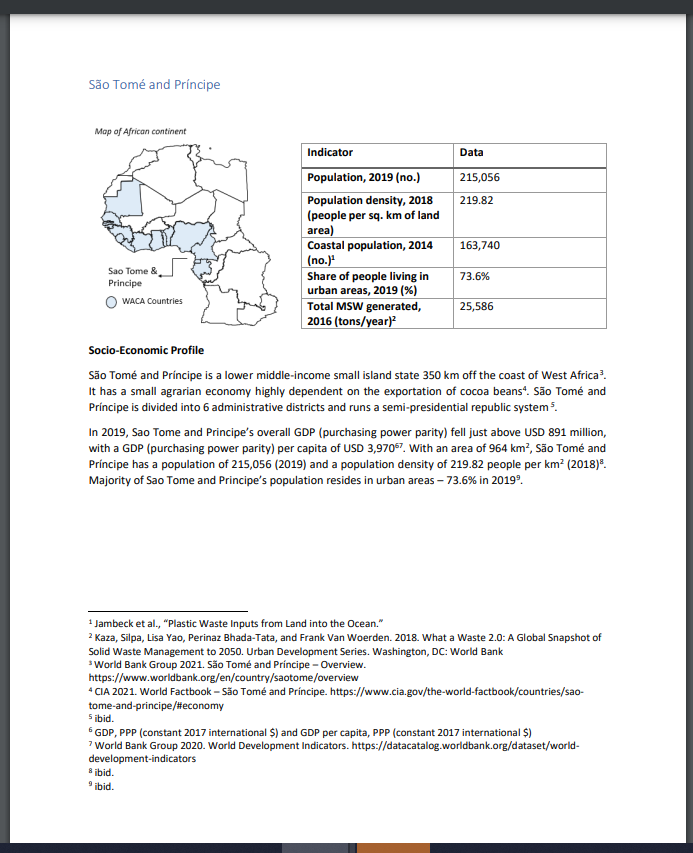
São Tomé et Príncipe est un petit État insulaire à revenu moyen inférieur, situé à 350 km au large des côtes de l'Afrique occidentale. Il possède une petite économie agraire fortement dépendante de l'exportation de fèves de cacao2 . São Tomé et Príncipe est divisé en 6 districts administratifs et fonctionne selon un système de république semi-présidentielle.
-
Publication
Sénégal: fiche pays sur les plastiques
Author: World Bank
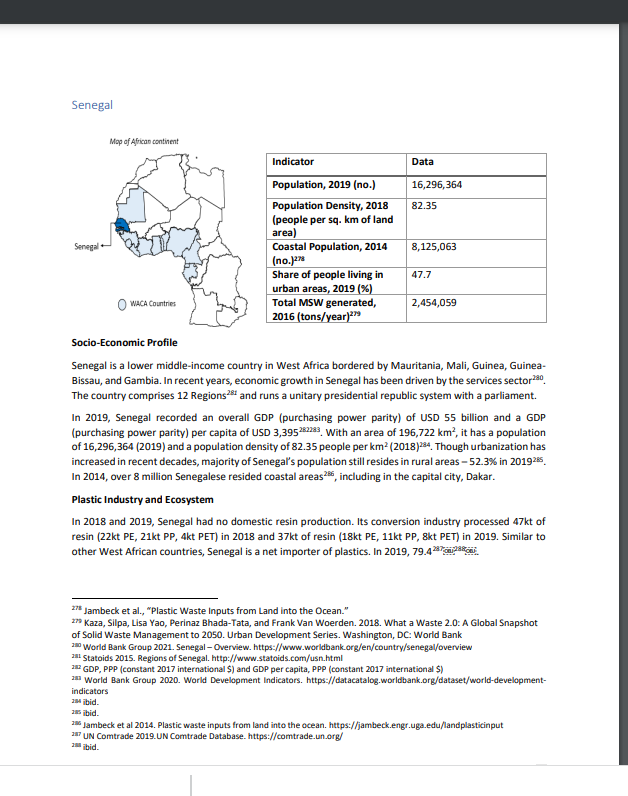
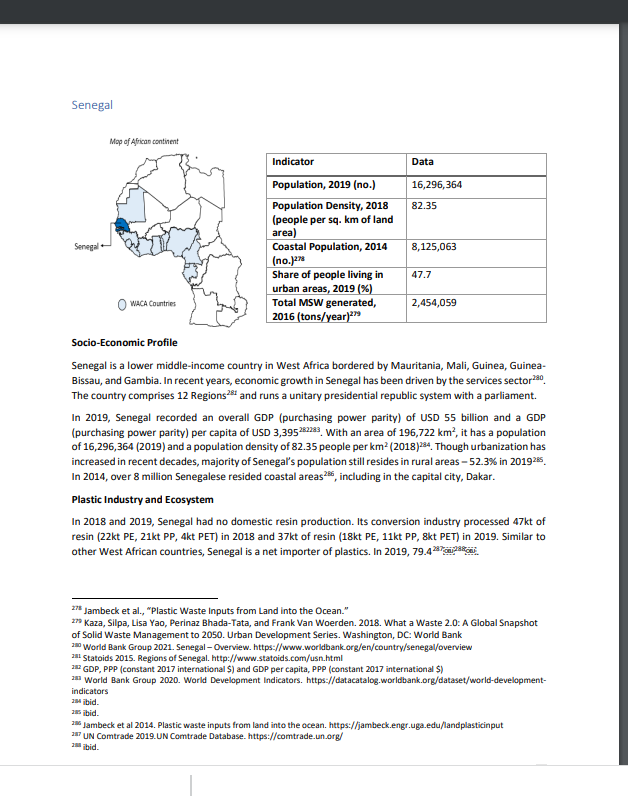
Le Sénégal est un pays d'Afrique de l'Ouest à revenu moyen inférieur, bordé par la Mauritanie, le Mali, la Guinée, la Guinée-Bissau et la Gambie. Ces dernières années, la croissance économique du Sénégal a été tirée par le secteur des services. Le pays comprend 12 régions et fonctionne selon un système de république présidentielle unitaire avec un parlement.
-
Publication
Nigéria : fiche pays sur les plastiques
Author: World Bank
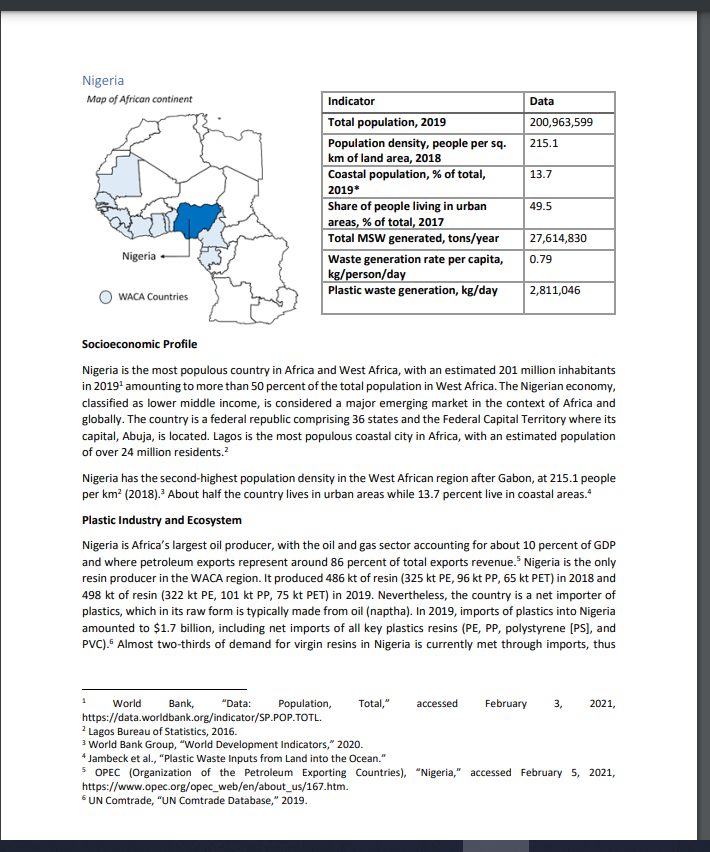
Le Nigeria est le pays le plus peuplé d'Afrique et d'Afrique de l'Ouest, avec une population estimée à 201 millions d'habitants en 20191, soit plus de 50 % de la population totale de l'Afrique de l'Ouest. L'économie nigériane, classée dans la catégorie des revenus moyens inférieurs, est considérée comme un marché émergent majeur dans le contexte de l'Afrique et au niveau mondial. Le pays est une république fédérale comprenant 36 États et le territoire de la capitale fédérale où se trouve sa capitale, Abuja. Lagos est la ville côtière la plus peuplée d'Afrique, avec une population estimée à plus de 24 millions de résidents.
-
Publication
Senegal plastic country brief
Author: World Bank
Senegal is a lower middle-income country in West Africa bordered by Guinea, Guinea Bissau, Gambia, Mauritania and Mali, . In recent years, economic growth in Senegal has been driven by the services sector. The country comprises 12 Regions and runs a unitary presidential republic system with a parliament.
-
Publication
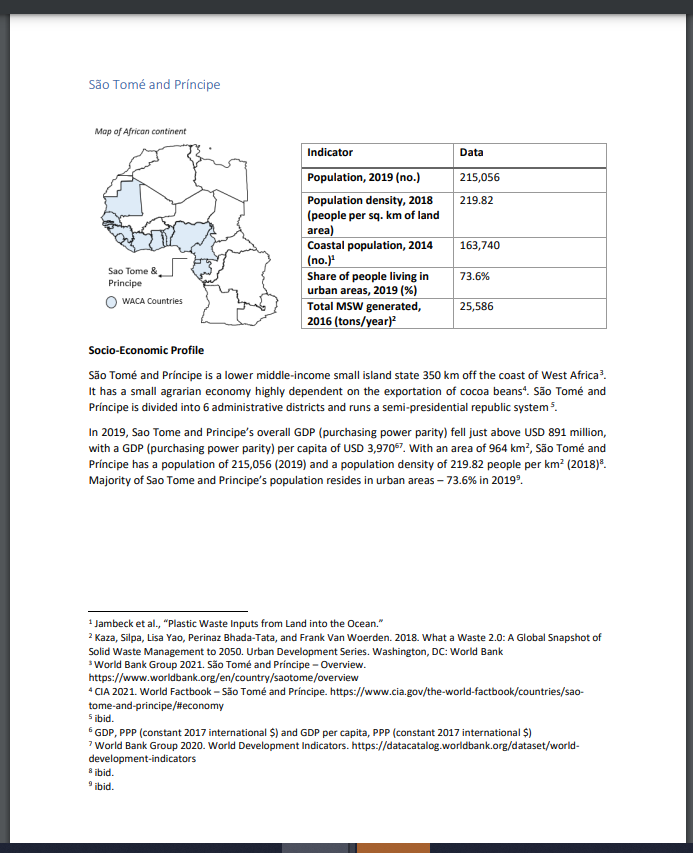
São Tomé and Príncipe plastic country brief
Author: World Bank
São Tomé and Príncipe is a lower middle-income small island state 350 km off the coast of West Africa1 . It has a small agrarian economy highly dependent on the exportation of cocoa beans2 . São Tomé and Príncipe is divided into 6 administrative districts and runs a semi-presidential republic system.
-
Publication
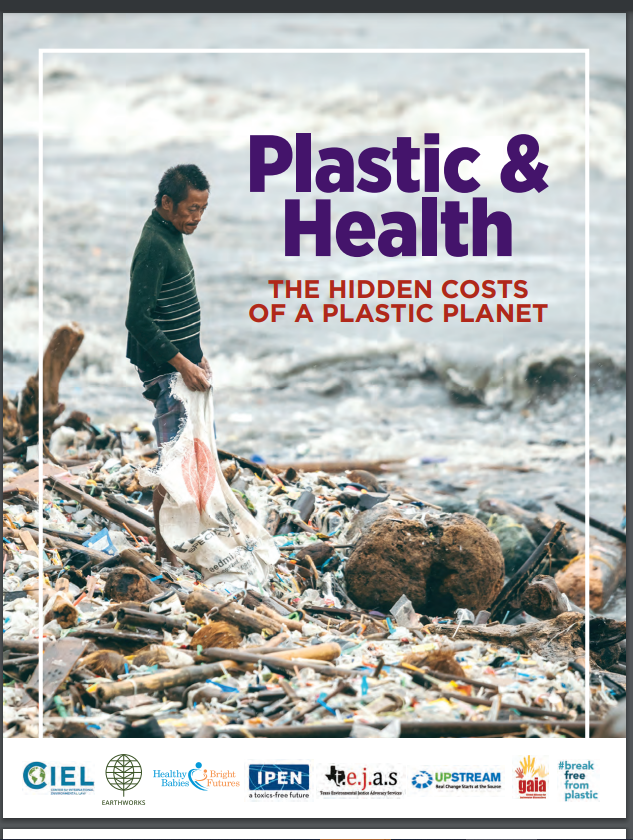
Plastic & health the hidden costs of a plastic planet
Author: David Azoulay & al
Despite being one of the most pervasive materials on the planet, plastic and its impact on human health is poorly understood. Human exposure to it grows with increasing plastic production and use. Research into the human health impacts of plastic to date have focused narrowly on specific moments in the plastic lifecycle, from wellhead to refinery, from store shelves to human bodies, and from disposal to ongoing impacts as air pollutants and ocean plastic.
-
Publication
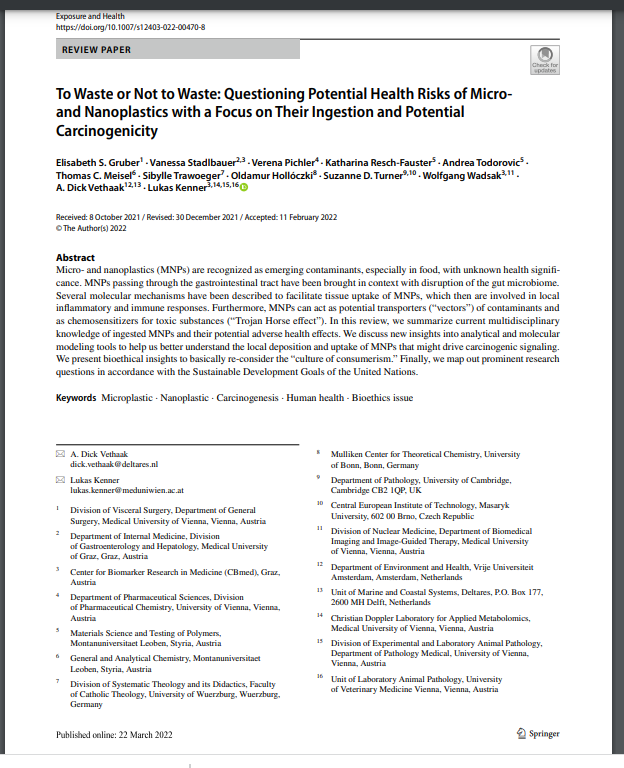
To waste or not to waste: questioning potential health risks of micro‑ and nanoplastics with a focus on their ingestion and potential carcinogenicity
Back in the 1950s, when plastic revolutionized the market, nobody anticipated the other side of the coin, until recently. Over the last few years, several studies have highlighted massively accumulating volumes of small plastic debris and its evident hazardous environmental consequences, calling for further in-depth investigations on the effect of micro- and nanoplastics (MNPs) on human health in general and on carcinogenesis in particular.
-
Publication
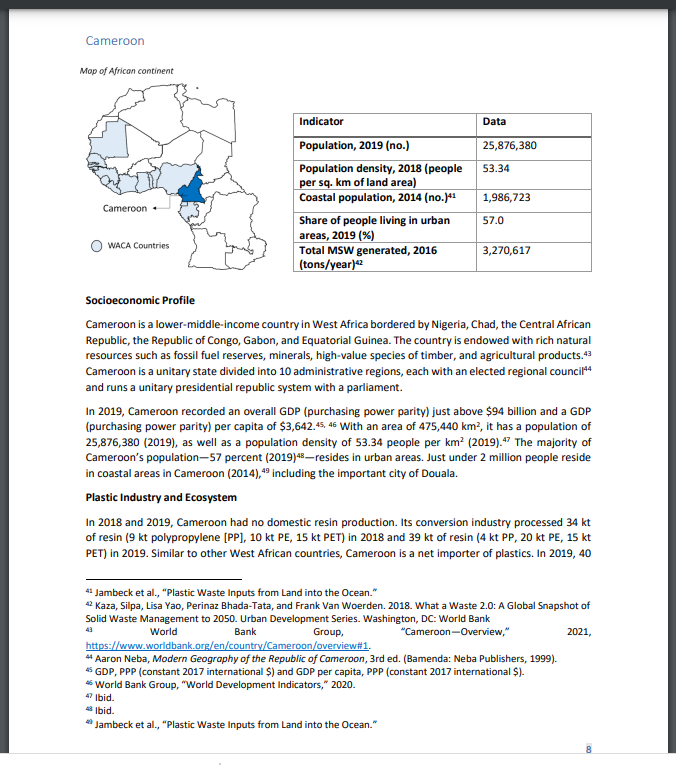
Cameroon plastic country brief
Author: World Bank
Cameroon is a lower-middle-income country in West Africa bordered by Nigeria, Chad, the Central African Republic, the Republic of Congo, Gabon, and Equatorial Guinea. The country is endowed with rich natural resources such as fossil fuel reserves, minerals, high-value species of timber, and agricultural products. Cameroon is a unitary state divided into 10 administrative regions, each with an elected regional council and runs a unitary presidential republic system with a parliament.
-
Publication
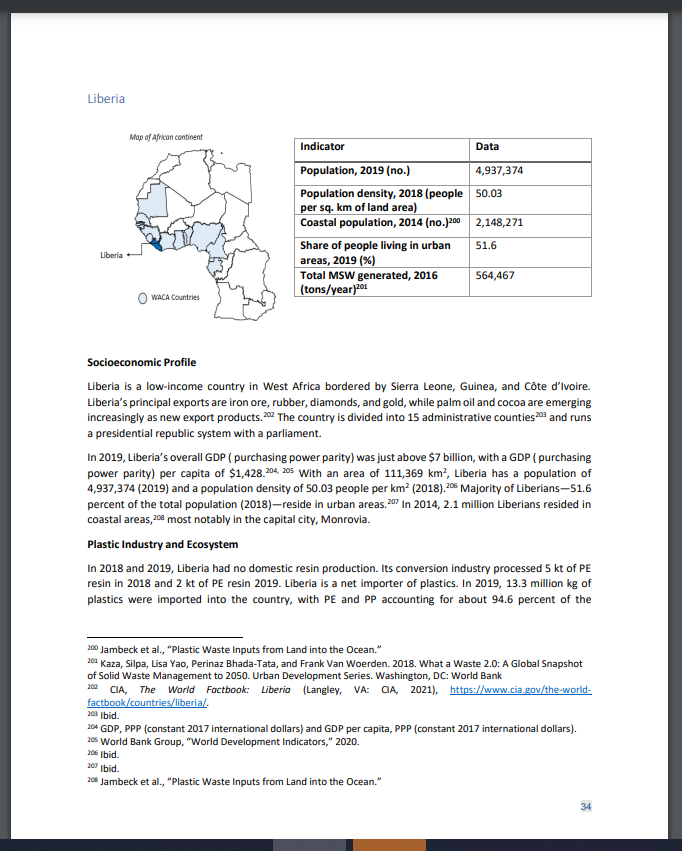
Liberia country plastic brief
Author: World Bank
Liberia is a low-income country in West Africa bordered by Côte d’Ivoire, Guinea, and Sierra Leone . Liberia’s principal exports are iron ore, rubber, diamonds, and gold, while palm oil and cocoa are emerging increasingly as new export products. The country is divided into 15 administrative counties and runs a presidential republic system with a parliament.
-
Publication
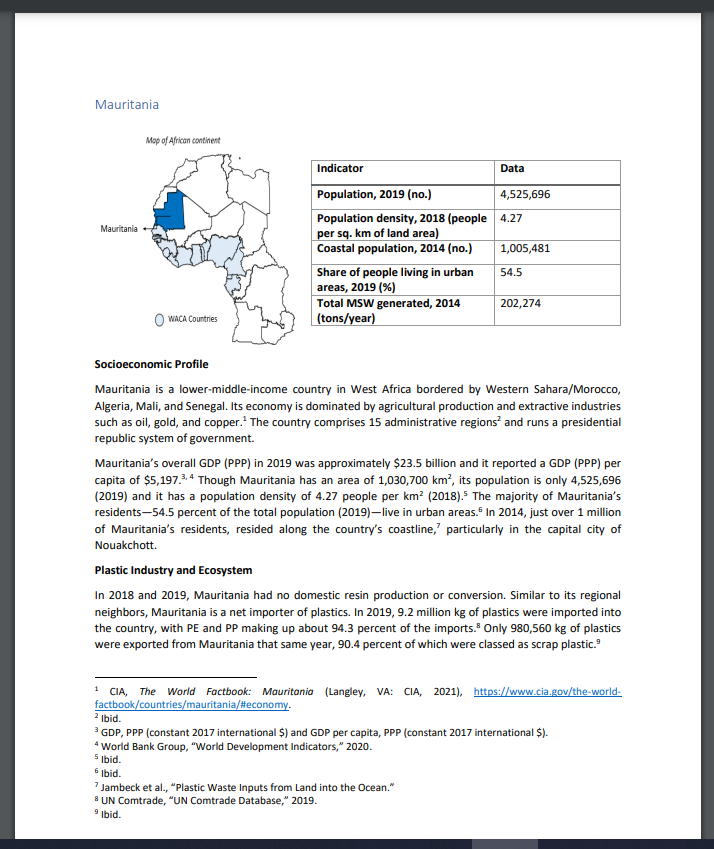
Mauritania plastic country brief
Author: World Bank
Mauritania is a lower-middle-income country in West Africa bordered by Western Sahara/Morocco, Algeria, Mali, and Senegal. Its economy is dominated by agricultural production and extractive industries such as oil, gold, and copper.The country comprises 15 administrative regions and runs a presidential republic system of government.
-
Publication
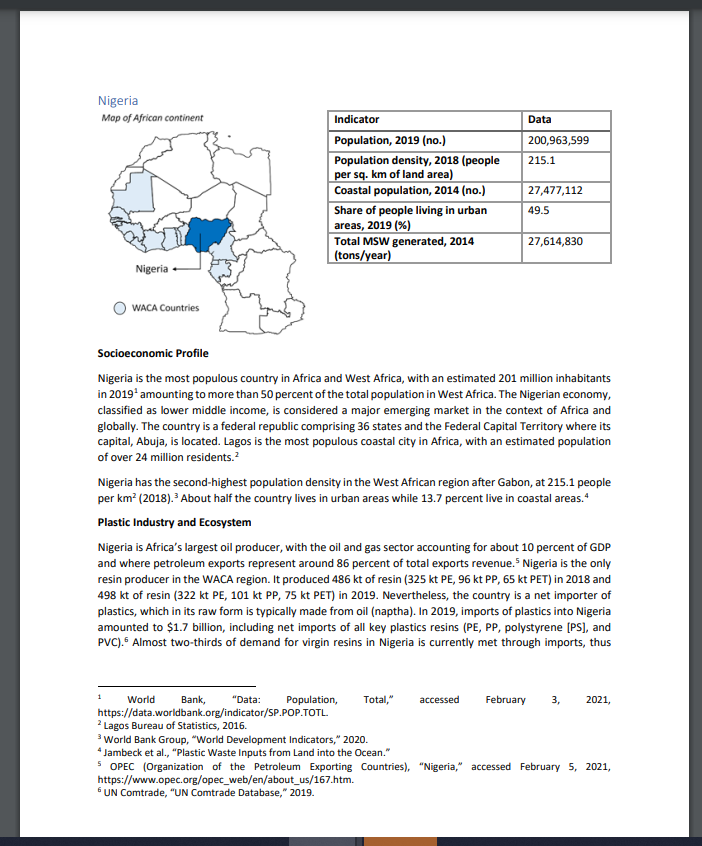
Nigeria plastic country brief
Author: World Bank
Nigeria is the most populous country in Africa and West Africa, with an estimated 201 million inhabitants in 20191 amounting to more than 50 percent of the total population in West Africa. The Nigerian economy, classified as lower middle income, is considered a major emerging market in the context of Africa and globally. The country is a federal republic comprising 36 states and the Federal Capital Territory where its capital, Abuja, is located. Lagos is the most populous coastal city in Africa, with an estimated population of over 24 million residents.
-
Publication
Sierra Leone plastic country brief
Author: World Bank
Sierra Leone is a low-income country in West Africa bordered by Guinea and Liberia. Its economy is driven by mining activities, with its principal exports being iron ore, diamonds, and rutile. The country is divided into four provinces and one administrative area and runs a unitary presidential republic system.
-
Publication
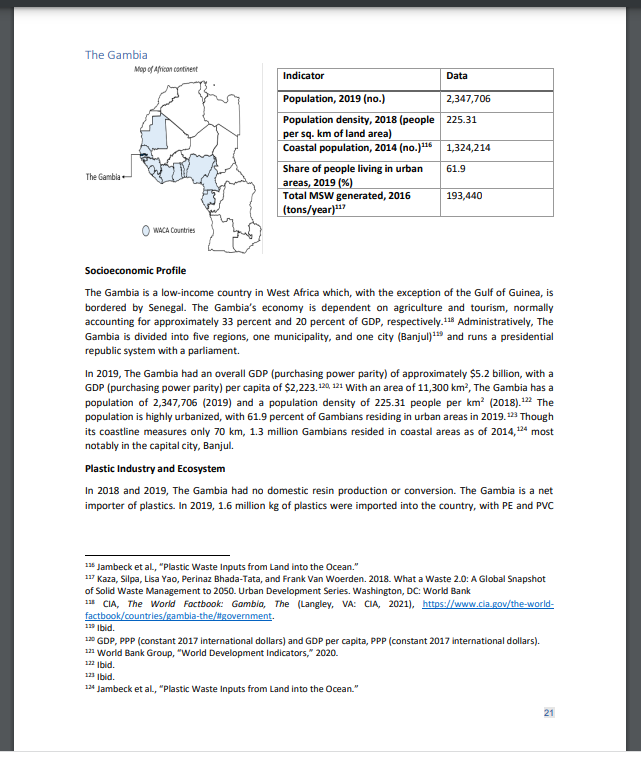
The Gambia plastic country brief
Author: World Bank
The Gambia is a low-income country in West Africa which, with the exception of the Gulf of Guinea, is bordered by Senegal. The Gambia’s economy is dependent on agriculture and tourism, normally accounting for approximately 33 percent and 20 percent of GDP, respectively. Administratively, The Gambia is divided into five regions, one municipality, and one city (Banjul) and runs a presidential republic system with a parliament.
-
Publication
Togo plastic country brief
Author: World Bank
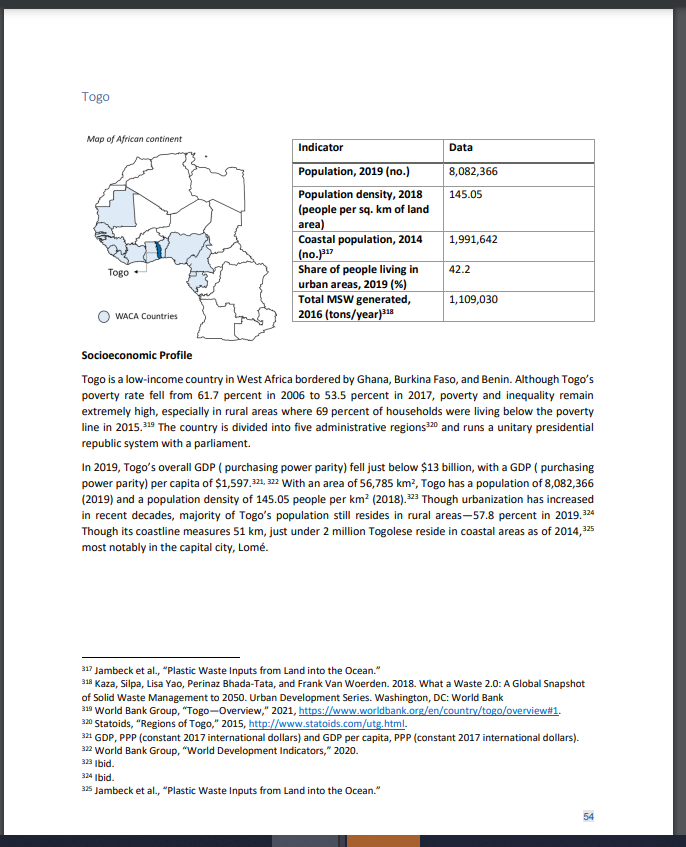
Togo is a low-income country in West Africa bordered by Ghana, Burkina Faso, and Benin. Although Togo’s poverty rate fell from 61.7 percent in 2006 to 53.5 percent in 2017, poverty and inequality remain extremely high, especially in rural areas where 69 percent of households were living below the poverty line in 2015. The country is divided into five administrative regions and runs a unitary presidential republic system with a parliament.
-
Publication
Guinea-Bissau plastic country brief
Author: World Bank
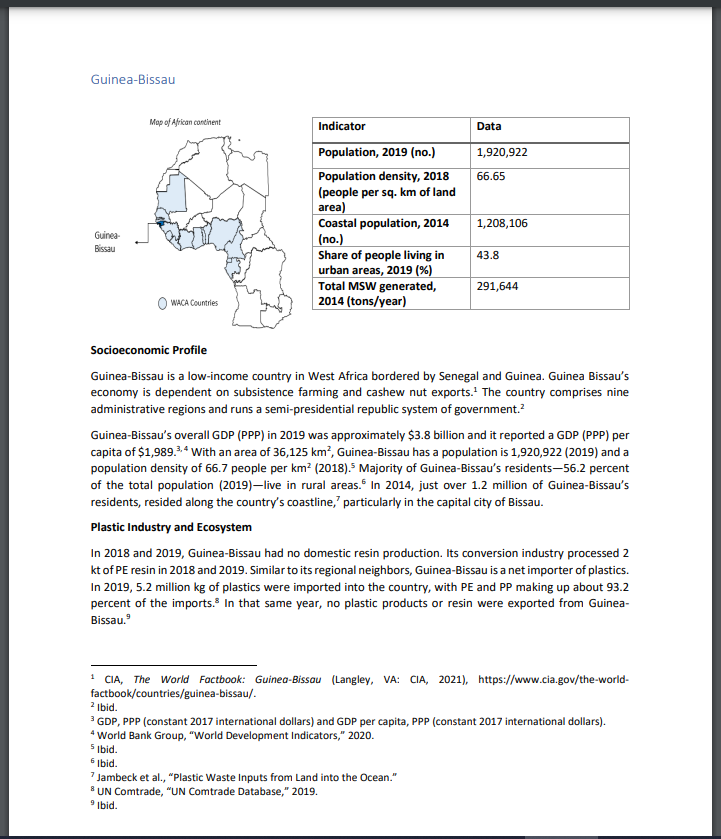
Guinea-Bissau is a low-income country in West Africa bordered by Senegal and Guinea. Guinea Bissau’s economy is dependent on subsistence farming and cashew nut exports. The country comprises nine administrative regions and runs a semi-presidential republic system of government.