-
WACA Gambia Briefs President Adama Barrow on the project activities and key milestones.
In a landmark meeting at State House, the WACA Gambia Project team, led by the Hon. Minister of Environment, Climate Change and Natural Resources, Rohey John Manjang, updated the President of the Republic of The Gambia, H.E. Adama Barrow, on the Project's progress.
The team was also joined in the meeting by the Permanent Secretary of the Ministry of Environment, Climate Change and Natural Resources, Ebrima Jawara, and the Director of the Ministry's Central Projects Coordinating Unit (CPCU), Mariama Ndow Jarju.
-
Nouakchott facing coastal erosion: Urgent actions needed to protect the capital
The Mauritanian capital, Nouakchott, one of the most climate-vulnerable cities along the Mauritanian coast, is confronting heightened risks from rising sea levels and coastal erosion. A tidal wave in 1997 exposed the fragility of the coastline, and today, uncontrolled sand extraction has severely degraded the dune cordon that once shielded the city—especially in the districts of Sebkha, Tevragh Zeïna, and El Mina.
-
Global Partnerships for Coastal Resilience: Japan and the University of Cape Coast
Coastal regions face increasing threats from climate change, erosion, and environmental degradation. West Africa is no exception, grappling with rising sea levels, severe erosion, and sediment mismanagement, which threaten livelihoods and ecosystems. Recognizing these challenges, the West Africa Coastal Areas (WACA) Program has championed the establishment of the Japan Knowledge Center.
-
WACA Project Brings New Hope to Flood-Affected Families in The Gambia
The WACA Project is set to transform the lives of families along the Kotu Stream, a flood-prone area in The Gambia’s Greater Banjul Area. The intervention targets communities that face regular inundation and economic hardship due to constrained waterways and uncontrolled human activity.
-
United Nations Ocean Conference (UNOC)
Description: United Nations Ocean Conference (UNOC)
Location: Nice, France
Type: Conference
-
Grand-Lahou Sand Spit Stabilization Project Engages Communities in Côte d’Ivoire
Local authorities in Côte d’Ivoire are set to stabilize the Grand-Lahou sand spit over an 11-month period, concluding in December 2025. A comprehensive awareness and engagement strategy is supporting the project, ensuring community safety and full participation as environmental changes unfold.
Key Project Measures and Community Involvement
-
West African Delegation Explores Dutch Nature-Based Solutions for Coastal Resilience
In November 2024, over 20 officials and coastal resilience experts from eight West African countries traveled to the Netherlands to study Nature-Based Solutions (NbS) for climate adaptation. The study tour, organized by the Netherlands Enterprise Agency (RVO) and the Partners for Water Program, with support from EcoShape, NL2120, and Invest International, provided hands-on exposure to Dutch innovations in coastal and urban water management.
-
Côte d’Ivoire: Income-Generating Activities as a Pillar of Community Resilience of Grand-Lahou
Coastal erosion and climate change have placed immense pressure on Grand-Lahou and Côte d'Ivoire communities, threatening livelihoods and ecosystems. The WACA Project tackles these challenges not only through physical interventions but also by empowering communities economically. Its Income-Generating Activities (IGA) initiative, a program's cornerstone, has transformed lives, bolstered economic resilience, and strengthened social cohesion for 1,219 individuals across 416 beneficiaries.
-
Coastal Resilience: Field Mission to Benin and Togo Showcases WACA ResIP Program's Impact
From December 8 to 13, 2024, influencers and journalists from WACA ResIP target countries participated in a field mission to Benin and Togo. Organized by the WACA Regional Support Bureau (WACA BAR), the visit highlighted tangible coastal protection solutions and promoted knowledge-sharing among participating countries.
-
The Gambia Hosts Regional Advocacy Workshop to Strengthen Coastal Resilience
From December 3 to 6, 2024, The Gambia hosted a regional training workshop on advocacy under the West Africa Coastal Areas Management Program (WACA) initiative. Organized by UICN/WACA BAR, the event brought together communication and institutional development specialists from nine coastal countries. The primary goal was to build capacity and craft strategies to protect critical ecosystems and support vulnerable coastal communities.
-
Regional Approach
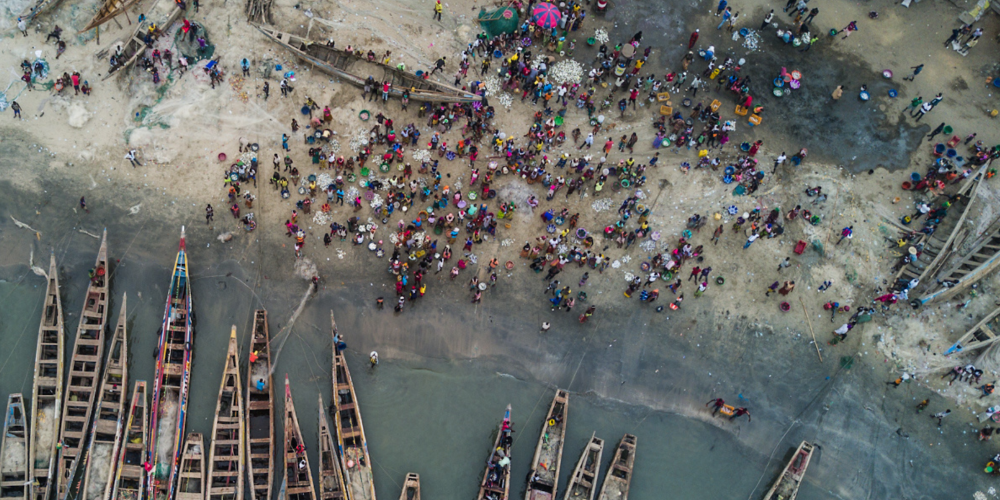
Regional Integration: WACA West Africa, Coastal Resilience
The West Africa Coastal Areas (WACA) Resilience Investment Project (ResIP) represents a unified regional approach to tackling the complex and interconnected challenges of coastal degradation in West Afri
-
Nature-based Solutions (NBS)

-
Mecanisme Regional De Gestion Des Plaintes Et Des Griefs
-
WACA Project Empowers Women Coconut Processors in Boko, Togo with New Equipment
In Boko, Togo, women coconut processors have significantly boosted their work efficiency and income, thanks to a coconut grater donated by the West Africa Coastal Areas (WACA) project. This machine has transformed their daily routines, making coconut grating faster, safer, and more productive. It has elevated the quality of coconut oil they produce, which is highly valued across Togo and beyond.
-
Nouakchott Coastline Mapping to Enhance Resilience Efforts
Nouakchott's vulnerable coastline is set to undergo precise mapping thanks to an advanced LIDAR survey launched under the West Africa Coastal Management Program (WACA) initiative. This effort aims to strengthen coastal resilience by providing a detailed view of the shoreline's condition, from the new conference center down to the southern edge of Nouakchott Port in Mauritania.