Sort By: Newest Post
-
Infographic
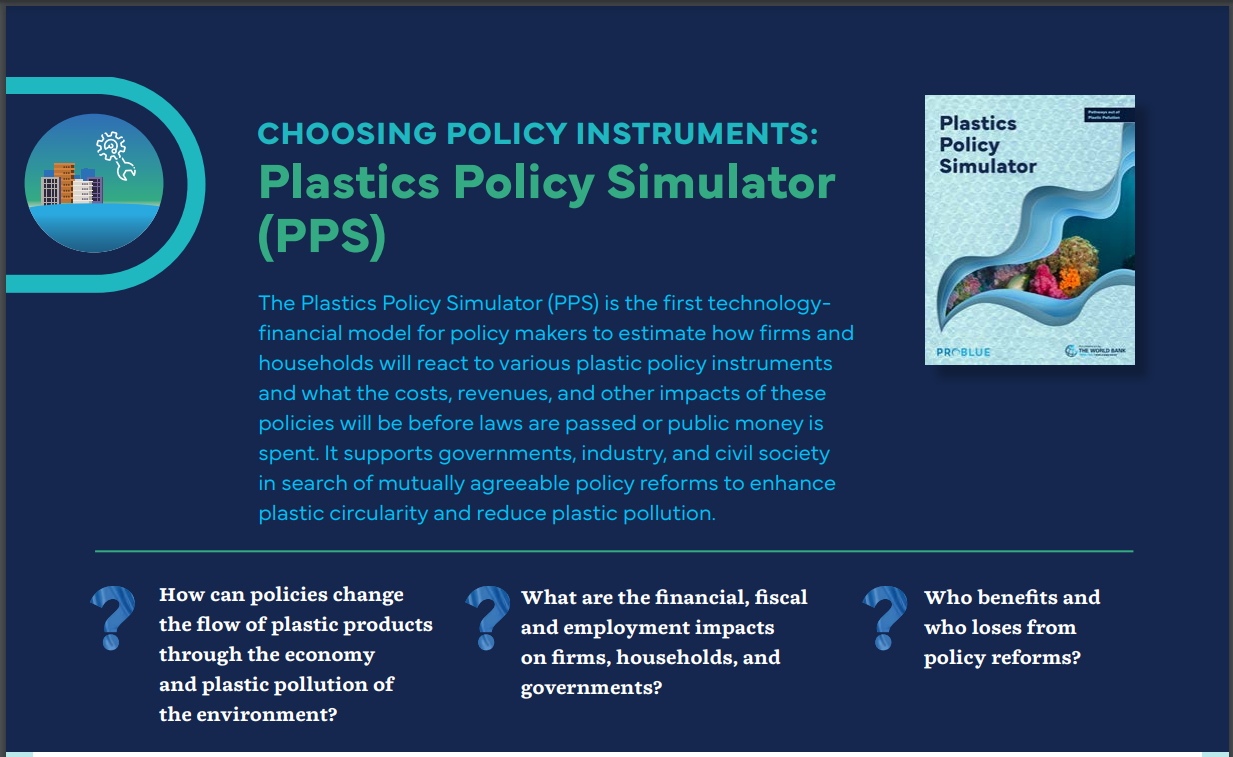
Choosing policy instruments: Plastics Policy Simulator (PPS)
Author: World Bank, PROBLUE
The Plastics Policy Simulator (PPS) is the first technologyfinancial model for policy makers to estimate how firms and households will react to various plastic policy instruments and what the costs, revenues, and other impacts of these policies will be before laws are passed or public money is spent. It supports governments, industry, and civil society in search of mutually agreeable policy reforms to enhance plastic circularity and reduce plastic pollution.
-
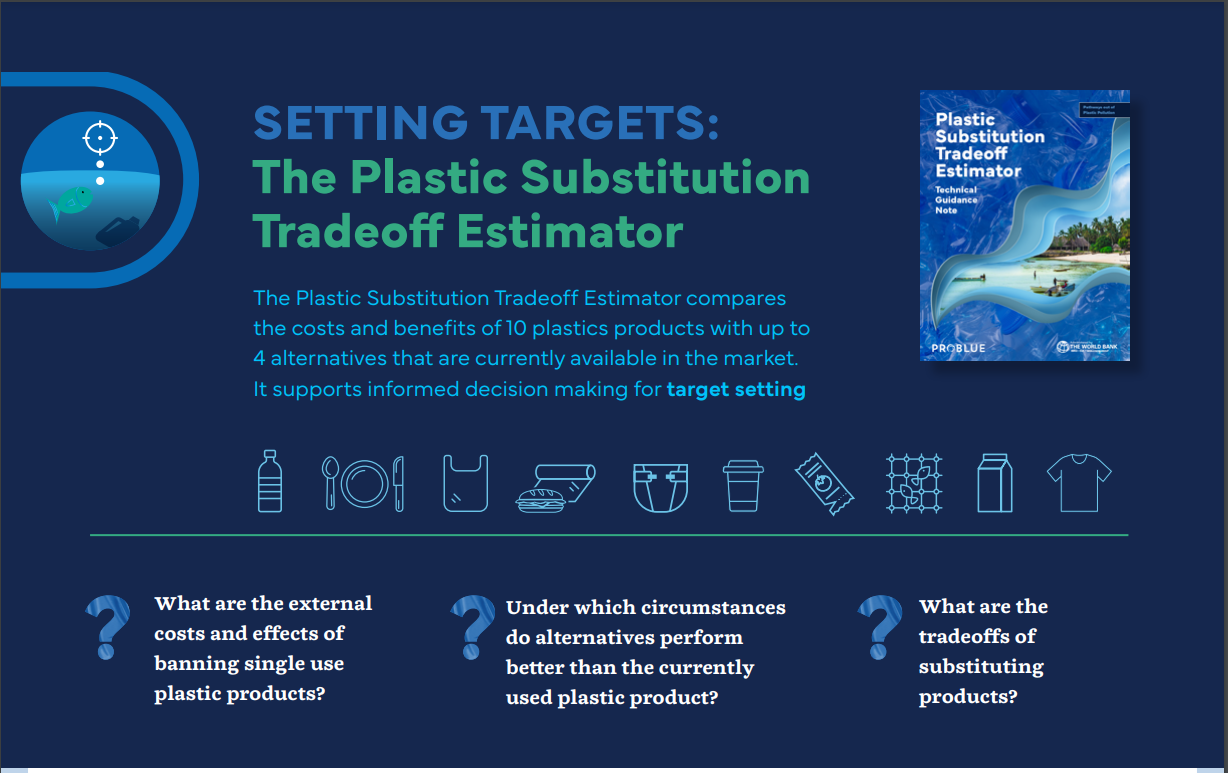
Settings targets: the plastic substitution tradeoff estimator
Author: World Bank, PROBLUE
The Plastic Substitution Tradeoff Estimator compares the costs and benefits of 10 plastics products with up to 4 alternatives that are currently available in the market. It supports informed decision making for target setting.
-
Plastics sector competitiveness strategy and action plan for Côte d'Ivoire
This document is based on findings from the first phase of the Invest in Africa Côte d'Ivoire Manufacturing project involving desk review and one-on-one interviews with key stakeholders.
-
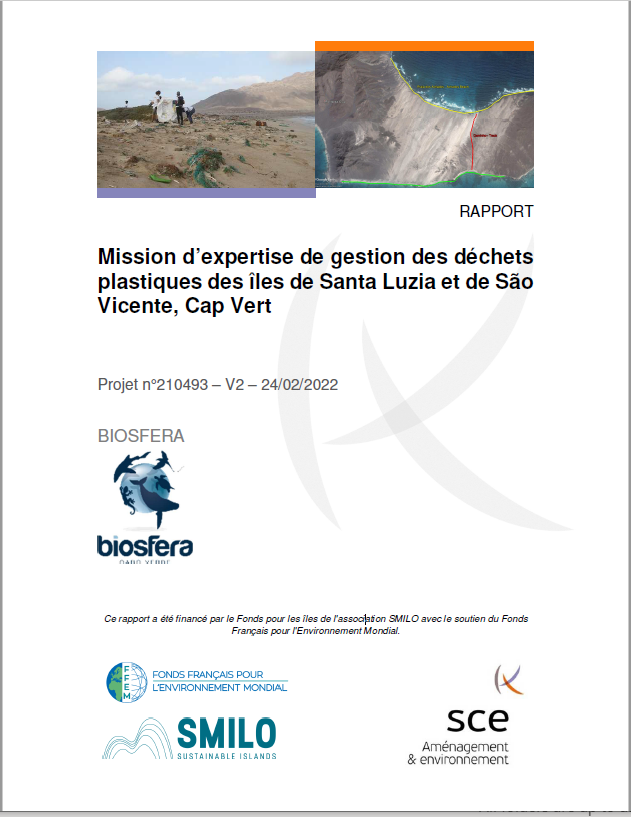
Mission d’expertise de gestion des déchets plastiques des îles de Santa Luzia et de São Vicente, Cap Vert
Author: Biosfera, FFEM, SMILE, SCE
La stratégie de conservation déployée par Biosfera sur la période 2020-2025 intègre un volet de lutte contre la pollution marine par les plastiques. Si les activités de nettoyage des plages restent essentielles, Biosfera souhaite renforcer son expertise sur les mesures appropriées de collecte et d’élimination des déchets à Santa Luzia.
-
Plastic waste management expertise mission on the islands of Santa Luzia and São Vicente, Cape Verde
Author: Biosfera, FFEM, SMILE, SCE
The conservation strategy deployed by Biosfera from 2020 to 2025 includes a component to fight marine plastic pollution. While beach cleaning activities remain essential, Biosfera wishes to strengthen its expertise on the appropriate measures for the collection and disposal measures in Santa Luzia.
-
Publication
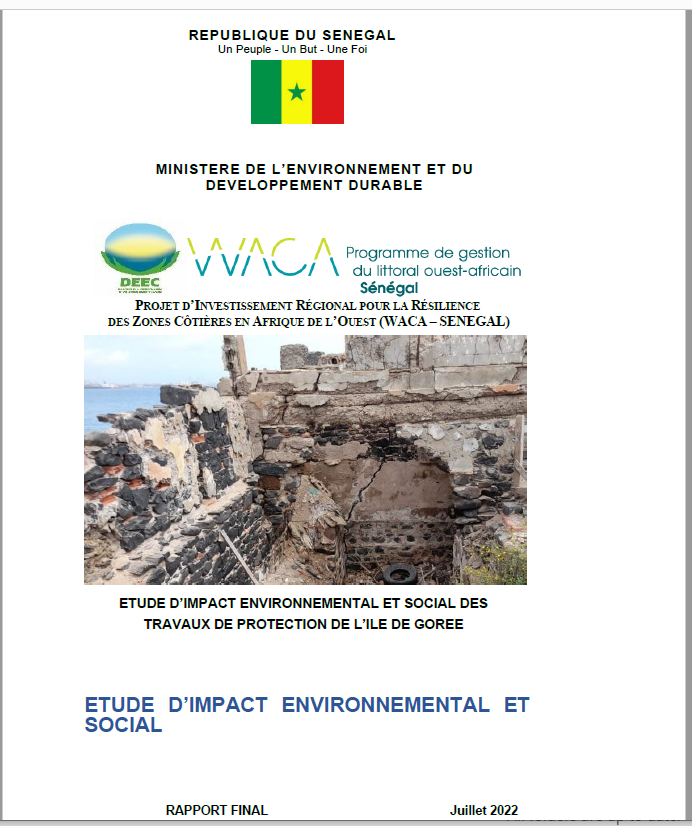
Etude d’impact environnemental et social du projet de protection côtière de l’Ile de Gorée
Author: WACA
Le projet de protection côtière de l’île de Gorée revêt deux composantes : l’aménagement d’une digue de protection (bordière) en enrochements et un volet d’aménagements paysagers. Le système de protection retenue consiste en l’aménagement d’une digue de protection (bordière) en enrochements à crête élargie et abaissée, arasée à la cote + 3,1 m CM soit une revanche considérée de la crête, par rapport au niveau Extrême (= + 2,8 m CM), de seulement 0,3 m.
-
Publication
Etude d’impact environnemental et social du projet de protection côtière de l’Ile de Gorée
Author: WACA
Le projet de protection côtière de l’île de Gorée revêt deux composantes : l’aménagement d’une digue de protection (bordière) en enrochements et un volet d’aménagements paysagers. Le système de protection retenue consiste en l’aménagement d’une digue de protection (bordière) en enrochements à crête élargie et abaissée, arasée à la cote + 3,1 m CM soit une revanche considérée de la crête, par rapport au niveau Extrême (= + 2,8 m CM), de seulement 0,3 m.
-
Publication
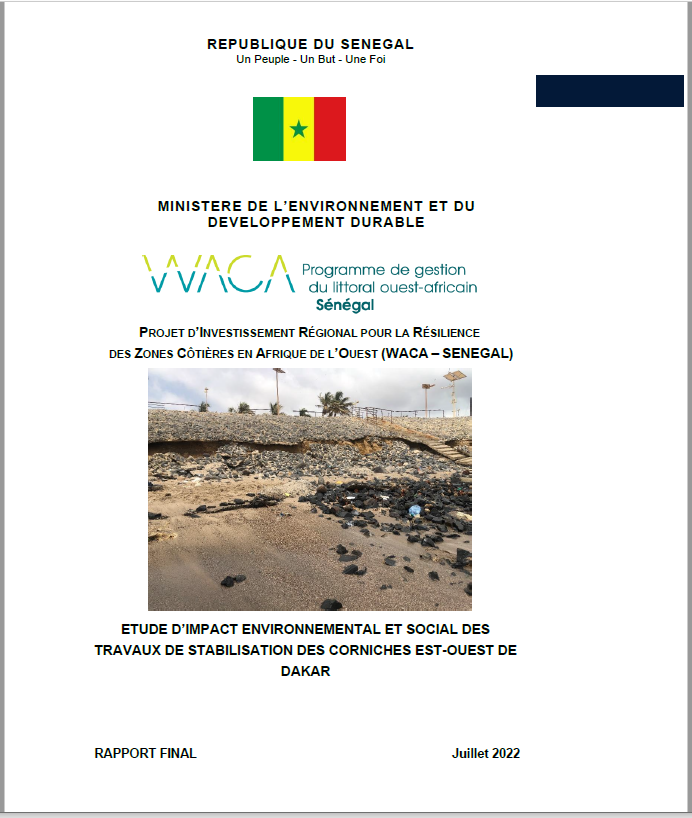
Etude d’impact environnemental et social du projet de protection côtière de la plage de l’Université Cheikh Anta Diop de Dakar et de l’Anse Bernard
Author: WACA, MINISTERE DE L’ENVIRONNEMENT ET DU DEVELOPPEMENT DURABLE
Le WACA ResIP, financé par la Banque Mondiale, d’une durée de 5 ans (2018-2023), ambitionne d’améliorer la gestion des risques naturels et anthropiques communs, en intégrant les changements climatiques, affectant les communautés et les zones côtières de la région d’Afrique de l’Ouest.
-
Publication
Etude d’impact environnemental et social du projet de protection côtière de la plage de l’Université Cheikh Anta Diop de Dakar et de l’Anse Bernard
Author: WACA, MINISTERE DE L’ENVIRONNEMENT ET DU DEVELOPPEMENT DURABLE
Le WACA ResIP, financé par la Banque Mondiale, d’une durée de 5 ans (2018-2023), ambitionne d’améliorer la gestion des risques naturels et anthropiques communs, en intégrant les changements climatiques, affectant les communautés et les zones côtières de la région d’Afrique de l’Ouest.
-
Publication
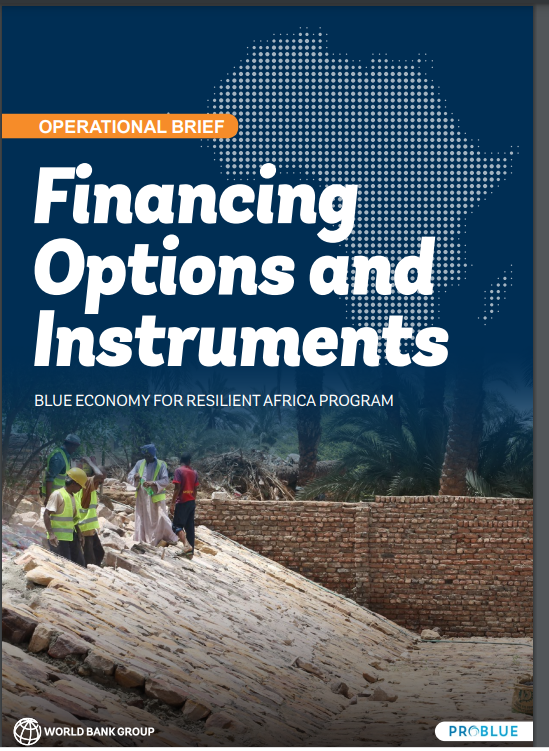
Operational brief: Financing Options and Instruments
Author: World Bank, PROBLUE
Many African countries would also benefit from accessing the World Bank’s full range of finance instruments, which spans grant financing, debt, and equity financing. Technical assistance or grant financing is often required to undertake the analytics and diagnostics needed to identify policy improvements.
-
Publication
Operational Brief: Developing and Incentivizing Institutions
Author: World Bank, PROBLUE
Thematic coordination involves identifying common development challenges that require coordinated action across agencies at the national and local level. Climate change adaptation, jobs, and livelihoods are important examples of such shared challenges.
-
Publication
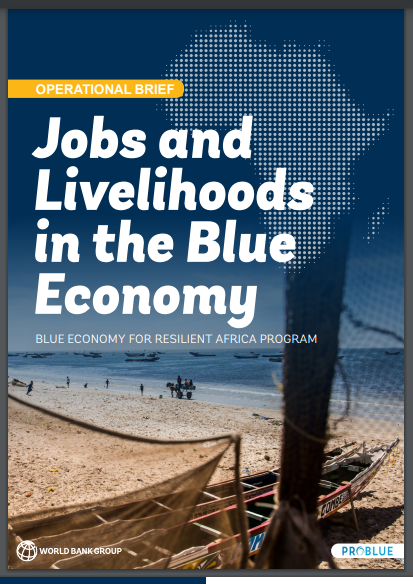
Operational brief: Jobs and Livelihoods in the Blue Economy
Author: World Bank, PROBLUE
-
Publication
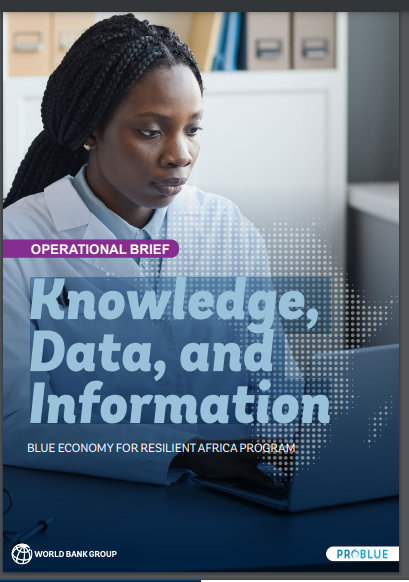
Operational brief: Knowledge, Data, and Information
Author: World Bank, PROBLUE
Improving the organization of—and strengthening access to—data and knowledge among governments, the private sector, academia, civil society organizations, financiers, and the public will help generate multisectoral, spatial, and sustainable development insights and attract more financing, including from the private sector and other development partners.
-
Publication
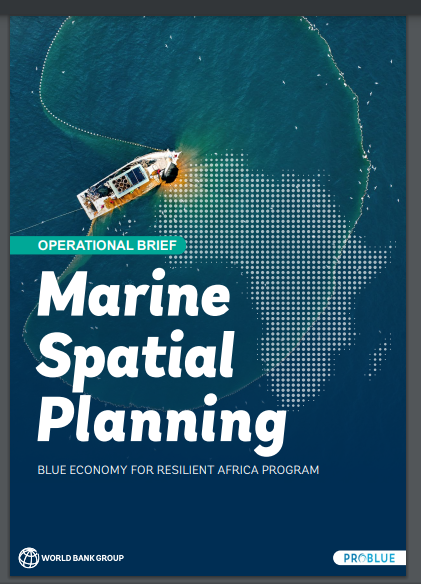
Operational brief: Marine Spatial Planning
Author: World Bank, PROBLUE
Marine spatial planning can help design coordinated coastal resilience programs at scale and identify possible lowcarbon development and growth pathways. This type of spatial planning can integrate measures articulated in nationally determined contributions and other instruments, budget for those measures, and monitor their progress.
-
Publication
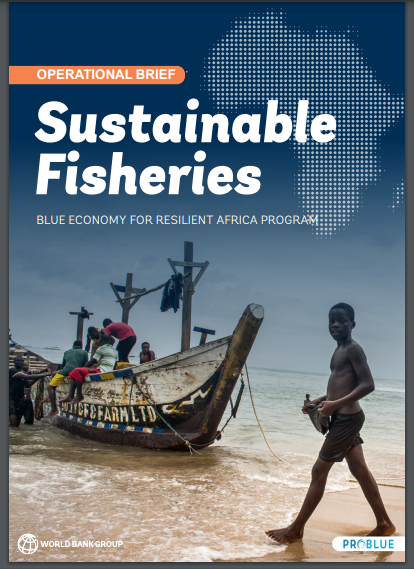
Operational Brief: Sustainable Fisheries
Author: World Bank, PROBLUE
Stronger capacity for sustainable fisheries management could involve working with fish farming communities to adopt climateresilient aquaculture or mariculture, and implementing climate adaptation programs to strengthen the fisheries value chain.